

Research Programming Light-Matter Interactions
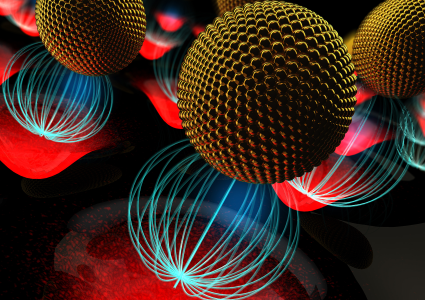
Manipulation by Light
We expand optical manipulation beyond direct optical forces by converting light into programmable thermal, fluidic, chemical, and mechanical fields. Inspired by transport phenomena in nature, we harness light-induced heating, cooling, and gradients to control the motion, interactions, assembly, structure, composition, and transformation of matter across scales. These multiphysical interactions enable energy-efficient platforms for measurement, manufacturing, micro/nanorobotics, and autonomous experimentation.
Manipulation of Light
We engineer materials and architectures that program how light is generated, confined, coupled, transported, and transformed. From quantum materials and resonant building blocks to collective photonic architectures, we tailor light across its spatial, spectral, polarization, chiral, thermal, and informational degrees of freedom. Nature-inspired design and artificial intelligence guide the discovery of unconventional photonic structures, while light-driven manufacturing and advanced characterization connect their architecture to emergent optical behavior.
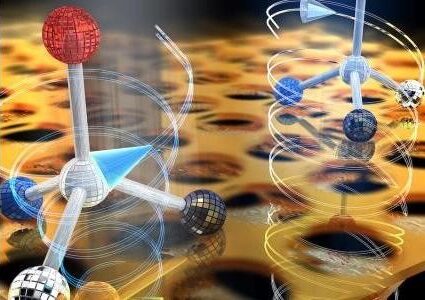
ADvanced photonic Systems
We integrate programmable interactions between light and matter into advanced photonic systems. By combining photonic materials with light-driven manipulation and artificial intelligence, we create systems with new capabilities to sense, act, adapt, and compute. These integrated platforms enable intelligent measurement, sustainable manufacturing, micro/nanorobotics, thermal management, and information processing across the life sciences, health, energy, sustainability, and computing.